

“HEY!”
We heard the call before we glimpsed the man. There he was — young, lean and bearded — jogging beside our bus and waving something in the air.
I thought perhaps his tuk tuk had broken down. Or perhaps it was a scam. Was he trying to lure our bus driver into stopping so he could rob the passengers?
We drove off around the bend, leaving the man behind as we swerved through the rain. I settled back in my chair and returned to my thoughts. No need to think about him any m—
“HEY!”
Damn, there he was again — running beside the bus, in a kind of manic desperation, and waving what appeared to be a big bunch of flowers. How had he outpaced a bus?
I realised that he must have scrambled directly up the slope as we went around corners. But why? Was he some sort of lunatic?
We saw — and heard — the man again as we ascended the slope, though I suspect at some point he was replaced by a body double. (I saw a tuk tuk lurking by the road.) It was a strange, vaguely unsettling phenomenon.
“Why was the man running with flowers?” We asked our guide.
“He’s selling flowers,” he said, as if it was the most obvious thing in the world.
Indeed he was. The “flower boys” have become a minor sensation in the field of international tourism. A Chinese traveller made one fantastically persistent, irrationally cheerful roadside flower salesman go viral on Chinese social media, for his tirelessness and his optimism.
There is something perverse about this. The poor lads have to (a) run up a mountain and (b) pretend to enjoy it. Normally, I assume, people have no time to stop (or, more cynically, suspect that they are scammers). At best, people buy a bunch of flowers and the flower boys have to trudge back down the hill to do it all over again.
There is a temptation to assume that while we comfortable Westerners have acquired frustration, and anxieties, and regrets, people with simpler — by which I mean poorer — lives are naturally joyful. I’m sure their lives can be anything but joyful (and, relatedly, anything but simple, either in a practical or emotional sense). Yet it would be a mistake to assume that the opposite is true and that life is merely tough. People I saw smiling and laughing in rural Sri Lanka — including people who had no incentive to put on a performance for well-fed Europeans — seemed happy like the rest of us.
I won’t comment at length on Sri Lankan politics here (indeed, I simply couldn’t). But I want to say one thing. In Elephant Complex, John Gimlette suggests that Sri Lankans are in denial — suppressing the memories of the dreadful war between the Sri Lankan government and the Tamil Tigers, or the devastating effects of the tsunami. I’m sure there is some extent to which this is true. There has been a lot of trauma, bitterness and shame to deal with (or not to deal with). But I would like to propose that what could seem like avoidance of dark themes could be a symptom of the acknowledgement of their complexity. It is far easier to be blunt and voluble on a subject if one has easy answers — or thinks that one has easy answers. When it comes to ethnic division and political disruption in Sri Lanka, though, there is no elegant descriptive or prescriptive story to be told. (I’m getting dangerously close to journalism here, but if you want one data point on the political complexities of Sri Lanka, consider that the democratically elected president used to be a member of a Marxist insurrectionary group.) This is not to excuse genuine neglect of dangerously contentious subjects. It is to suggest that questions which are difficult to resolve — and, indeed, might be impossible to solve without compromise and qualification — sometimes call for subtlety and quiet.
In Kandy, we had watched young men firewalking. What looked like an exercise in courage and endurance had a lot to do with lightness on the feet.
A highlight of our later days in Sri Lanka was a safari in Yala National Park. We had the luck of seeing a leopard almost immediately — prowling through the bushes with well-fed confidence. I felt bad when our driver slammed his jeep into reverse to give us a better look, and the leopard scurried off like a startled pet cat.
One of my favourite animals was a water buffalo wallowing in a lake. It must have had some vague sense that a crocodile could be lurking nearby. But it still lay in the shallow water and soaked up the sun.
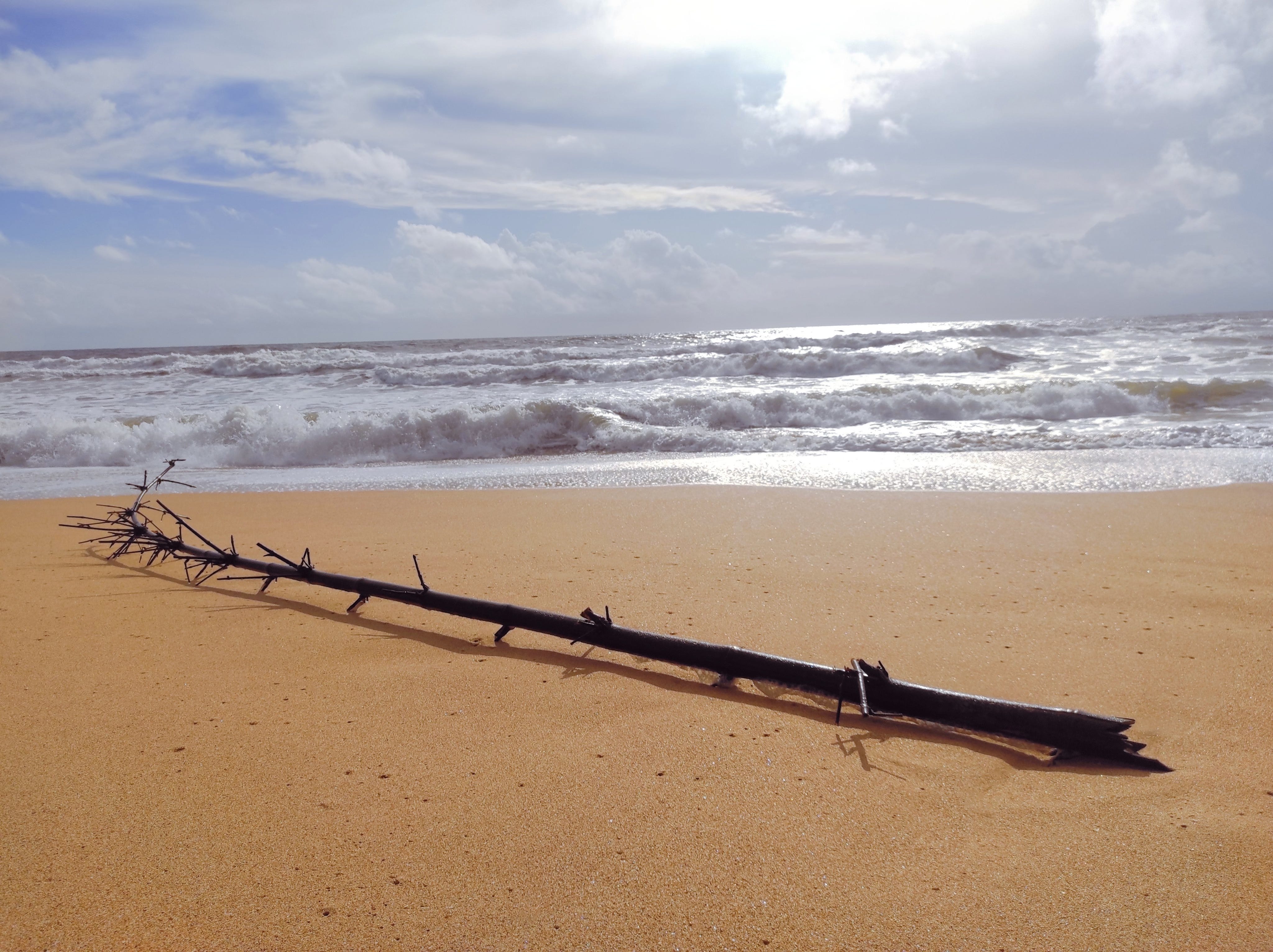
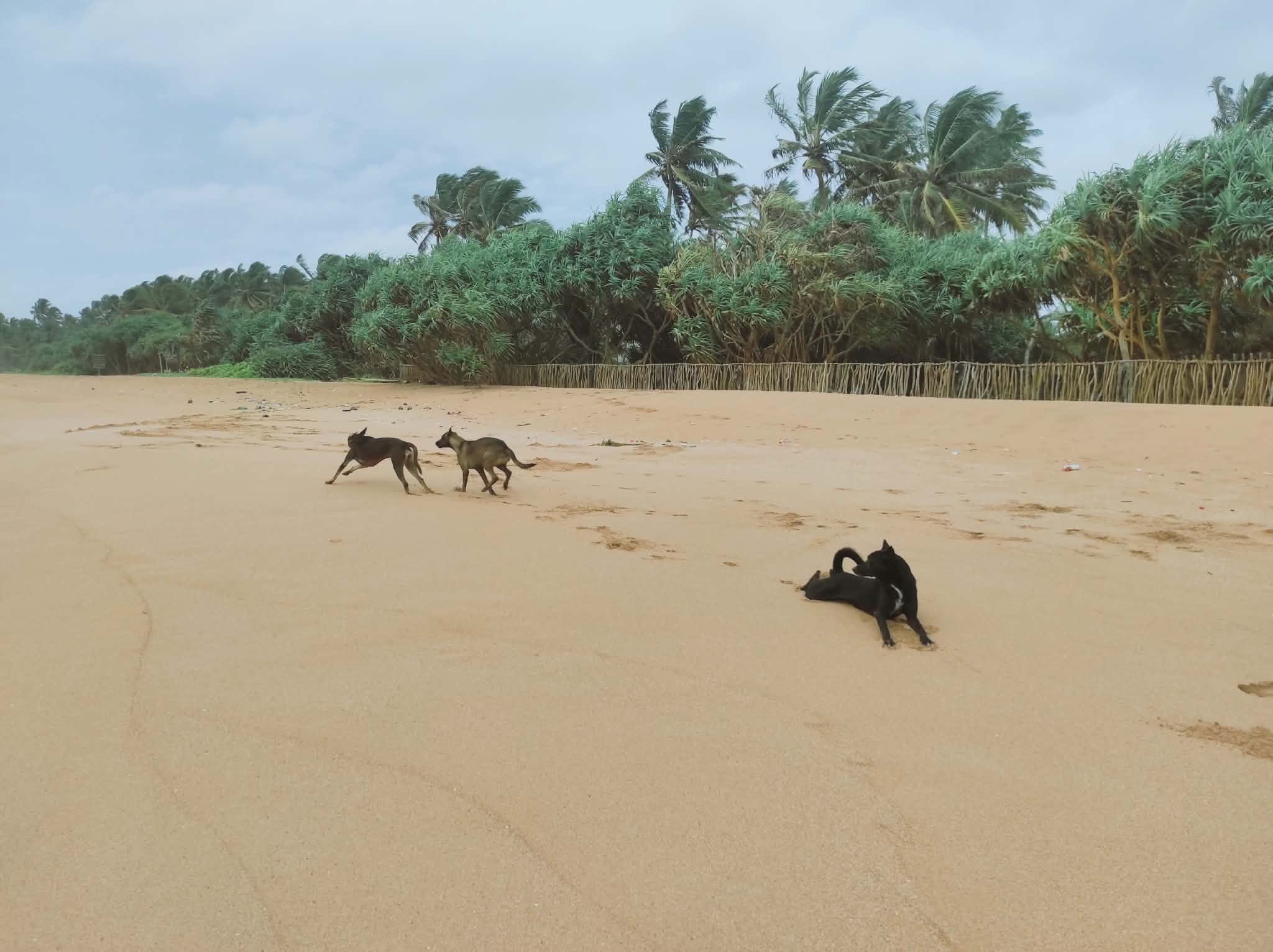
At the beach, trying to sweat out the respiratory infections we had been lugging around the island, we watched the waves heave in and out. Soon, we would be going back to home life, with all of its daily stresses and its looming mysteries. We watched two dogs prowl up the beach towards another dog. The lone pup shrank away and then darted forwards mischievously. Soon, the three dogs were playing happily in the sand.
The trip back reminded me of my dislike for travel. The compacted tedium and stress of a delayed flight from Colombo to Sharjah, wondering if we would make our connecting flight, also triggered my vague neurosis about somehow being separated from home. Ultimately, though, we were rushed helpfully and effectively through Sharjah Airport to our plane. (But don’t think I’ve forgotten my Monsters, Sheikh Mohamed bin Zayed Al Nahyan.) It was a relief to be home — though a relief chiming with echoes of interesting experiences and beautiful sights.
Back up in the mountains, the flower boy must still be running his Sisyphean run. I hope it’s satisfying when the performance works, and I hope the view on the way down is beautiful. Echoing Camus, I must imagine the flower boy happy.