

This one will be self-indulgent. Read at your peril.
When I was in my early twenties — a loooong time ago — I was in dire need of a career direction. “Why don’t you sell some of your writing?” My Gran asked. “Oh, Gran. As if anyone would buy my writing.”
It wasn’t self-deprecation. It just seemed realistic. Nonetheless, ten years ago this month, my first real op-ed was published. I had written blogposts — so many blogposts — before but this was my first real column.
A woman I knew from Twitter, Claire Lehmann, had set up a webmag in Australia called Quillette. I felt inspired to write something. My first column was … rejected. But my second, about the persecuted church, was a winner.
I began writing for Quillette regularly. I had pretty short hours as an ESL teacher and no real hobbies other than drinking. It was fun to scratch my intellectual and political itches.
Those were the early days of what became the “Intellectual Dark Web” — when people of all sorts were reacting against censorious “social justice” activism. Quillette became a bit of a hub for such voices — so, in turn, I got attention. A couple of magazines commissioned me and, much to my own surprise, I had become a writer.
I’ve written a lot that has made me proud over the last ten years — pieces I think were right, pieces I think were funny, and pieces (not many pieces but some pieces) that I think were beautiful. (I remain pleased with “Year of the Cold”, “Bath Time” and “Confessions of an English teacher abroad”.)
I’ve had far more freedom to be playful than I would have guessed, from reviewing energy drinks to writing very seriously about professional wrestling. (Indeed, writing very seriously about deathmatch wrestling for a post-liberal journal.)
I’ve been very lucky, and I’m very grateful.
But you have to have had some very, very big successes to dwell on your successes. So, I thought it would be productive to write about the times when I’ve been wrong. What shouldn’t one do as an opinion columnist?
Don’t write about something that doesn’t interest you.
I’ve never written something I didn’t believe in — at least at the time — but I have accepted commissions on subjects that didn’t interest me. Granted, sometimes there are subjects that don’t quite grab you but that you become invested in as you learn about them. At other times, though, there are subjects you simply couldn’t care less about. When I’ve written about these subjects, my writing has been flatter than day-old beer.
Don’t rush an opinion for the sake of having an opinion.
I really regret — as I’ve written before — beating the drum in favour of shutdowns in March 2020. I had been concerned about COVID since early in January, and I did push back against some kinds of shutdowns, so I don’t want to frame myself as some kind of mere sheep, but I still supported major state action without a rational basis for doing so. I’m not sure I could have expressed a rational argument against shutdowns. But the point is that the world didn’t need Ben Sixsmith’s half-baked opinion. I could have just not had a prescriptive take. It’s dishonest to act as if we have clear and substantive opinions on everything — something that would be completely impossible.
This also applies in a more “micro” sense. I’ve always tried to be prolific — and enjoyed being prolific — but I’ve sometimes rushed a piece at the expense of thinking and writing clearly. I once wrote a film review that contained two big honking errors about the script and I still feel bad about it. A bit more patience and professionalism would have spared me that — richly merited — shame.
Don’t mistake vibes for a worldview.
I have some general beliefs about the facts of life which are naturally associated with conservatism: I’m pretty pessimistic about human nature, I think that people are unequal in all sorts of ways, and I think old buildings tend to look better than new buildings. So, I used to have a lot of fun vaguely throwing around words like “tradition” and “order”. But then I realised that at least some people thought I was the kind of person who thought women shouldn’t wear trousers and all post-nineteenth century music should be banned. That was my fault. I’d been — and I should emphasise unconsciously — alluding to a deeper and more radical reactionary outlook than I actually held. These days, if I say X I try to be more clear about what X means specifically.
Don’t give your word so carelessly that you can’t keep it.
This is a bit of a raw one, but I recently agreed to do something and then realised that for various reasons I couldn’t do it. The thing is: I could have known that from the beginning if I had been thinking clearly. So, I had to rather ignobly and irritatingly break my word — all because I hadn’t been careful enough about it to begin with.
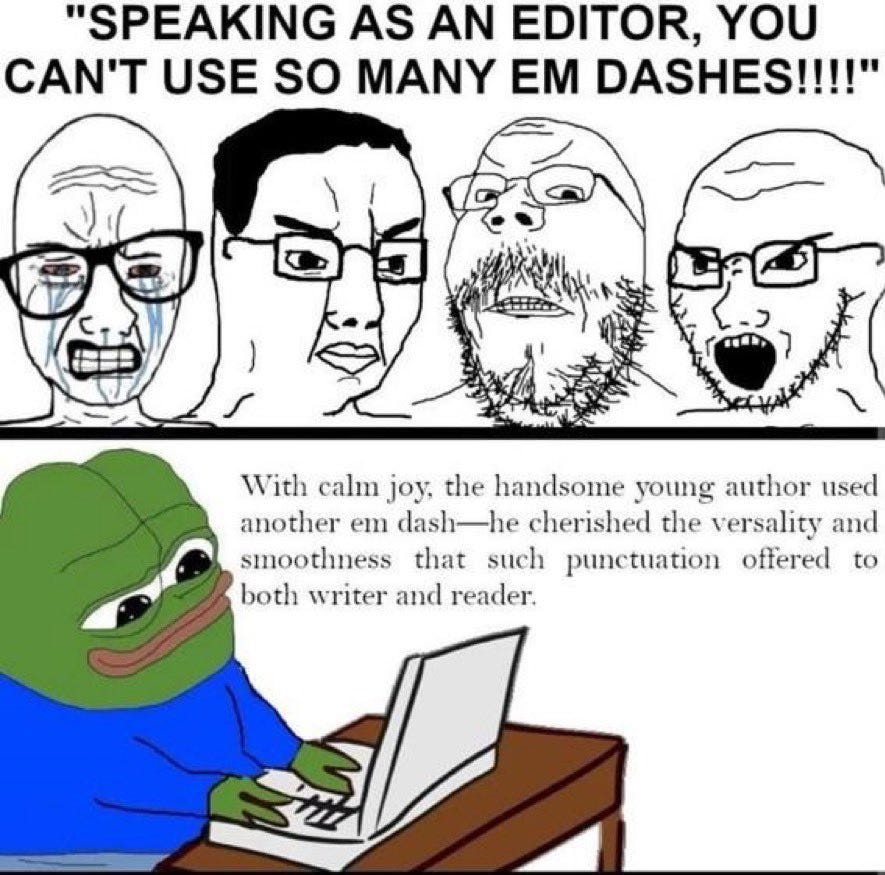
Don’t use en dashes.
I’m a convert to em dashes — and before they became associated with AI, thank you very much — and I can barely read my old pieces where I used en dashes. It’s like looking at an old haircut. They’re just ugly!
Don’t bang on for too long.
Okay, this isn’t one I’ve done. It’s one I’m worried about doing. It would be nice to think, as a writer, that you’ll be endlessly curious and endlessly energetic. Sadly, all of us have seen writers who have said everything they have to say, multiple times, and are going through the rhetorical motions out of habit, existential anxiety, or a desperate need to pay the rent after their other half got the house in the divorce.
I hope I’ll know when to stop before I get really dull. But I also hope that it will be a good few years before this happens.
Conservatism: when old buildings look better than new buildings.
I second almost all of that, save for the en dash bit (because German punctuation rules are slightly different and we use the en dash where you guys—mostly—use the em dash).