

I mentioned this week on X that I had suffered from anorexia and got a response from a user who claimed that he had never heard of men being anorexic.
There were two possible responses. One was:
What do you mean you’ve never heard of men being anorexic!?!? You’re promoting stereotypes! Aaargh!
Another was:
Well, yes, it’s typically associated with women, so that is not surprising. But men can be anorexic too!
I think the second kind of response tends to be more helpful. Generally, stereotypes exist for a reason. Anorexia is associated with girls and women because most people who suffer from anorexia are girls and women.
Still, there is a place for correction. In clinical settings, men account for somewhere between 5 to 11 per cent of patients diagnosed with anorexia. Literature specific to the male experience of anorexia, on the other hand, makes up less than 1 per cent of articles that address the condition. So, the relationship between men and anorexia remains a bit mysterious. I can’t claim to be any sort of expert but perhaps I can offer some insight.
There have been some famous cases of anorexic men. Dennis Quaid sought treatment for anorexia after dropping piles of weight for Wyatt Earp in 1994. Richey Edwards of the Manic Street Preachers clearly had an eating disorder (and I’m not sure it was totally coincidental that I was a big fan of The Holy Bible). But for obvious reasons these have been marginal cases.
There are, in broad terms, qualitative as well as quantitative differences between the sexes when it comes to eating disorders. Disordered eating among women is typically associated with — albeit not reducible to — the desire to be thin. For men, it is more typically associated with the desire to be lean. I can’t really speak from personal experience here, because my teenage anorexia did originate from a desire to be thin, but the pursuit of lean muscularity can make dramatic dieting less dangerous, because it inherently demands more nutrition, but also potentially more insidious, because self-destructive behaviour could wear a more convincing disguise.
Sasha Gorrell and Stuart B Murray discuss the similarities between “cutting”, where professional and amateur bodybuilders cut calories to achieve maximal leanness, and anorexic behaviour, and I do think it is important to be clear that temporary extremes, whether or not they were advisable, are not necessarily the same as permanent extremes. But it is the case that the former can slip into the latter, as in the example of Dan Stein who spoke to Men’s Health about dramatically and consistently cutting calories while still trying to maintain a punishing gym routine.
Eating disorders in men are two times as commonly diagnosed among gay men as among heterosexual men. This has something to do with aesthetics, as gay men are above averagely likely to value leanness, and I suspect it also has something to do with higher levels of neuroticism and, from a more positive angle, greater willingness to seek and accept clinical help. This said, most men with eating disorders — like this author — are heterosexual, so I’m not trying to replace one stereotype with another.
I’ve been talking about eating disorders in general, so anorexia, or extreme calorie restriction, is worth distinguishing from bulimia — a cycle of bingeing and purging — and anorexia athletica — an intense and ruthless preoccupation with exercise. Having had all three, what connects them is an obsessive focus on self-control for its own sake. This is worth distinguishing from goal-oriented discipline — for example, the weight lifter who won’t miss a session in the gym because he wants to raise his max bench press. I’m sure this could get unhealthy but it’s a lot likelier to be associated with good physical habits — e.g. eating enough — and it locates a sense of self-fulfillment in something constructive. When perfectionism is associated with control as an end in itself, on the other hand, self-fulfillment is located in something destructive.
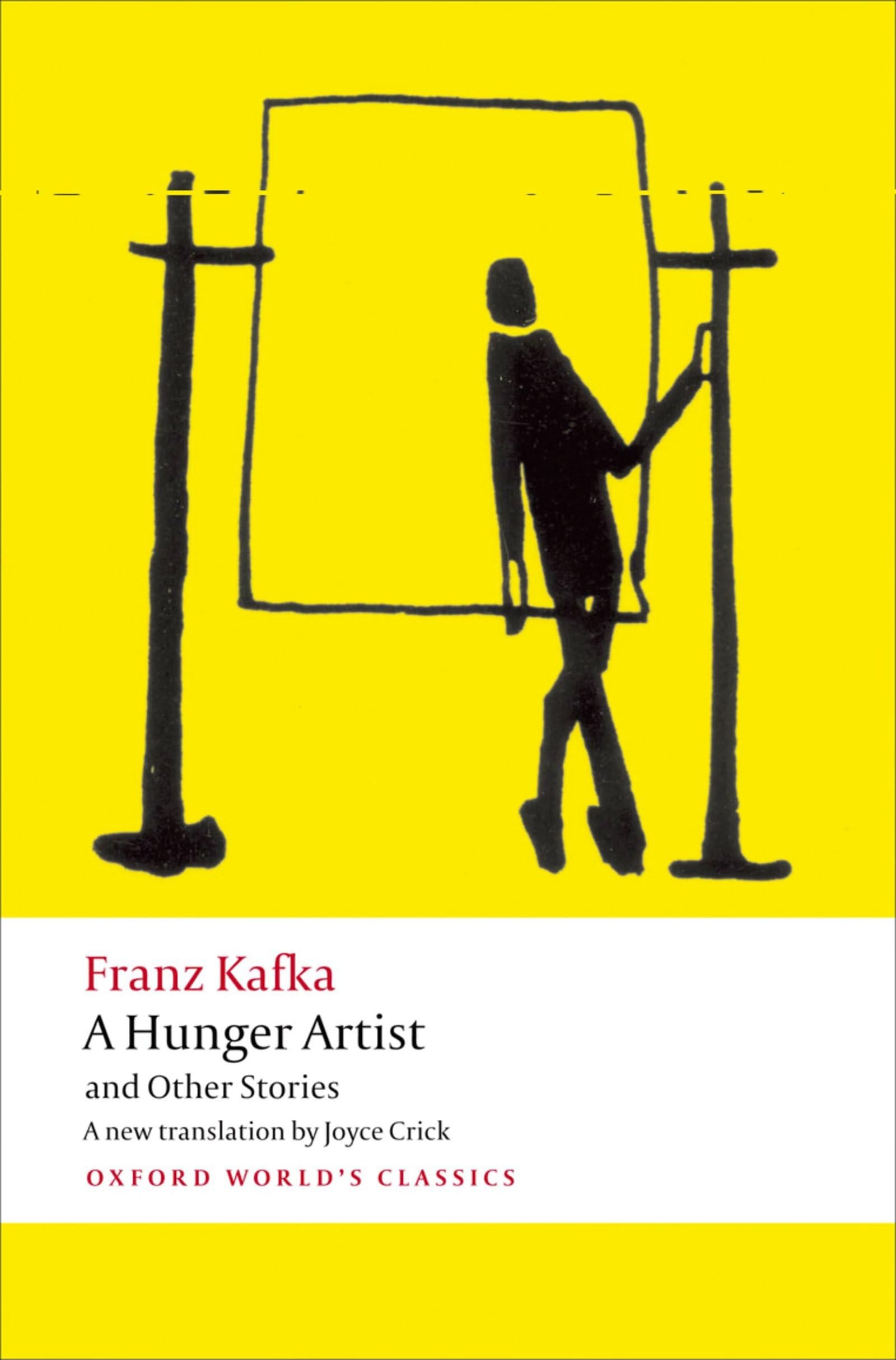
Also relevant is body dysmorphia — an intense preoccupation with a perceived defect in one’s physical appearance. Some men have an irrational sense of smallness, which can lead to emotional distress and destructive behaviour like abusing steroids. Some men, on the other hand, have an irrational sense of fatness. I think — as I have written before — that this is associated with fear and disgust towards one’s own physicality. This was creatively and hauntingly explored by Franz Kafka — a man who most definitely suffered from an eating disorder. As I wrote:
Body dysmorphia is not just being unhappy with how you look. That’s part of it, of course, but it isn’t all of it. It’s also being repelled by how it feels to be embodied.
The Metamorphosis is not reducible to this but I’m sure it was an influence on Kafka’s understanding of Gregor Samsa’s “pathetic and repulsive shape”. Why does Gregor retain such composure when he wakes “transformed…into gigantic insect”? Because he had felt somewhat insectile all along.
Eating disorders, then, are not solely about food or body image, but can have deep psychological roots. That said, physiological effects of starvation itself can intensify and entrench restrictive behaviors. “Effects of starvation,” as Paul Garfinkel and Allan S. Kaplan wrote, “Cause the syndrome of anorexia nervosa to be self-perpetuating.” In the Minnesota Starvation Experiment, for example, during World War Two, a selection of healthy conscientious objectors were deliberately starved. They endured physical effects, of course, but also mental effects. They began to have a monomaniacal, ritualistic preoccupation with the food they were given, and lost interest in and energy for other things. Addressing the psychological roots of the condition, then, is exceptionally difficult until the sufferer has been convinced to start physical recovery.
This is why early intervention is generally advisable. Sufferers don’t become likelier to acknowledge that they have a problem as the condition becomes more problematic — indeed, the opposite is often true.
That said, early intervention also entails the risk of pathologising unexceptional behaviour. What I think people should be sensitive to is not just food restriction but food restriction pursued to unsustainable extremes or, crucially, as an end in itself; not just physical dissatisfaction but physical dissatisfaction that becomes a dominant and inexplicable theme in someone’s life; not just weight reduction but a mental withering. It isn’t very common, happily — but it can be very dangerous.