

This year, Tarnowskie Góry turns 500. This landmark for an Upper Silesian mining town is not big news in Poland, never mind the world, but it is big news for me.
Tarnowskie Góry, which has a population of around 60,000 and is nestled in the forests near big cities like Gliwice and Katowice, was built around its silver mine. A bold feat of engineering brilliance, where water was extracted from the mine shafts to supply local towns, this has received UNESCO heritage status.
Throughout various times in regional history, Tarnowskie Góry was Polish, Prussian, German and then Polish again. Its Prussian history means that it is a rare Polish town with a Protestant church on its market square.
The local landowners were the Von Donnersmarcks — an uber-rich family of feudal lords turned industrialists who built various parks and palaces before being driven out of the region by the communists. (Florian Henckel von Donnersmarck, a descendant of the family, directed the fantastic Oscar-winning film The Lives of Others.)
Tarnowskie Góry was close enough to Germany for the Nazis to pursue Germanisation during the war. The local synagogue was burned and Jewish people were removed. Streets were renamed things like “Adolf-Hitler-Straße”. Once the Nazis lost, the German population largely fled or was expelled. A once-multi ethnic town had become almost entirely Polish.
Under communism, Tarnowskie Góry was fairly typical of working-class Silesia — built around factories that produced mining equipment and children’s clothes. (There was also a chemical factory, the grounds of which remain closed because they absolutely seethe with hazardous waste deposits.) Nowadays, TG is more of a historic town and a bedroom community.
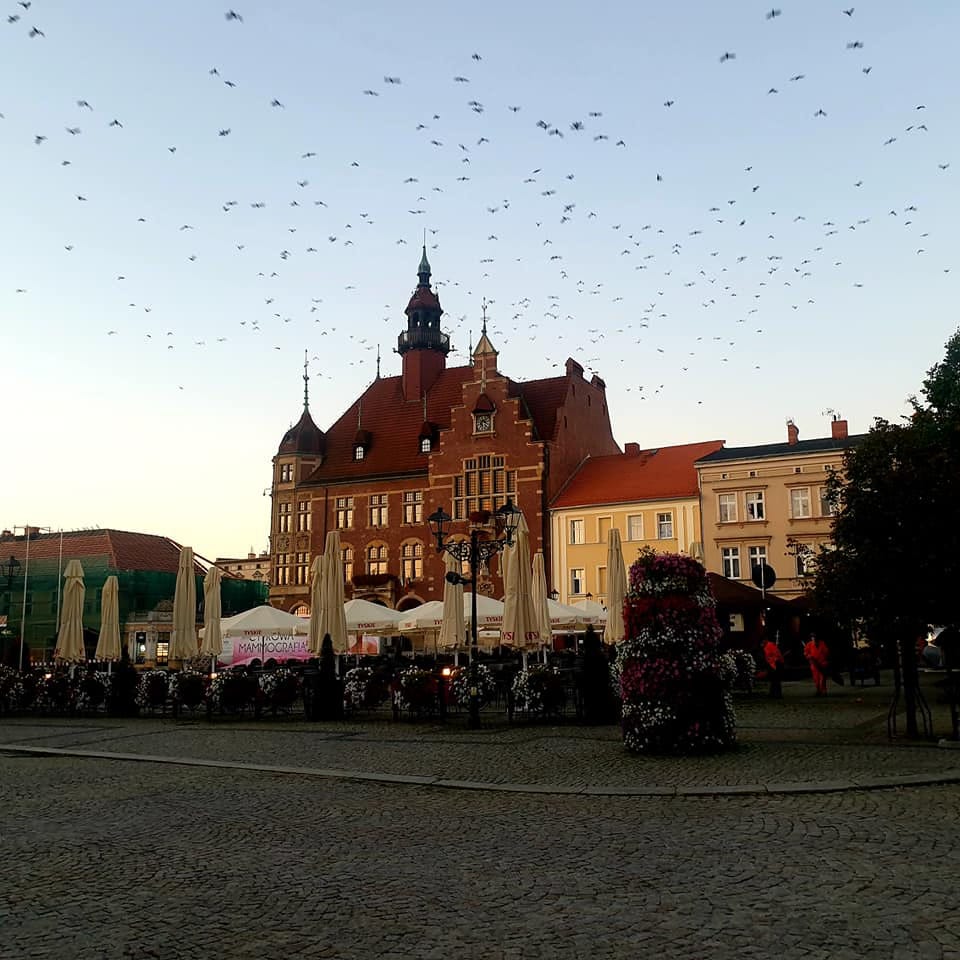
I moved to Tarnowskie Góry in 2013, when I was 22. Whether or not I live there in the future, it will always be my spiritual hometown.
Back then, I was unemployed and unqualified — still only half-recovered from anorexia. Most of my day — which, in more conventional terms, included none of the morning and most of the night — was spent hunched over the computer. I was the sort of person who was becoming an awkward footnote in a family.
But I had one goal — to teach English abroad. My mum was an English teacher in Bath, where we lived, and my sister was teaching English in Moscow.
I wanted to go to Japan. Alas, Japan didn’t want to have me. But I had a profile on a Teaching English as a Foreign Language website, where potential teachers had to name four countries they would like to work in. I named Japan, Italy (I had a mafia obsession), and, more or less randomly, Spain and Poland. One morning, I woke up to an invitation to a town I had never heard of in a country I knew almost nothing about.
“This is our new bus station!” announced my new boss a week later, as we drove into Tarnowskie Góry. Well, I thought, there must be something good about this place if it has a new bus station.
I’ve written about my love for Tarnowskie Góry again, and again, and again, so I suspect that I don’t have to tell you that I rather liked the place. I’m not being at all hyperbolic, though, when I add that if I had gone anywhere but Tarnowskie Góry, there would have been something like a tenfold higher risk that I would have ended up depressed, dependent or dead.
It was perfect for me: big enough to explore, but small enough to be familiar; urban enough for a fulfilling social life but rural enough to feel close to nature; prosperous enough to be comfortable yet not so geared around commerce as to feel homogenised and corporate. You could have a wild night in bars like Valhalla and Bakaraj and then go to the fields, and the forests, and the lake and feel like you were in the wild. (It goes without saying that it helped to meet so many kind and interesting people.)
I like to think that I’ve been a loyal local patriot. “Why did you go to Poland?” I used to be asked when I was visiting Britain. “Why did you go to Tarnowskie Góry?” I used to be asked when I was visiting Warsaw. Both questions hummed with a mild but unmistakable disdain. It’s better than I here, I used to growl at these snobs.
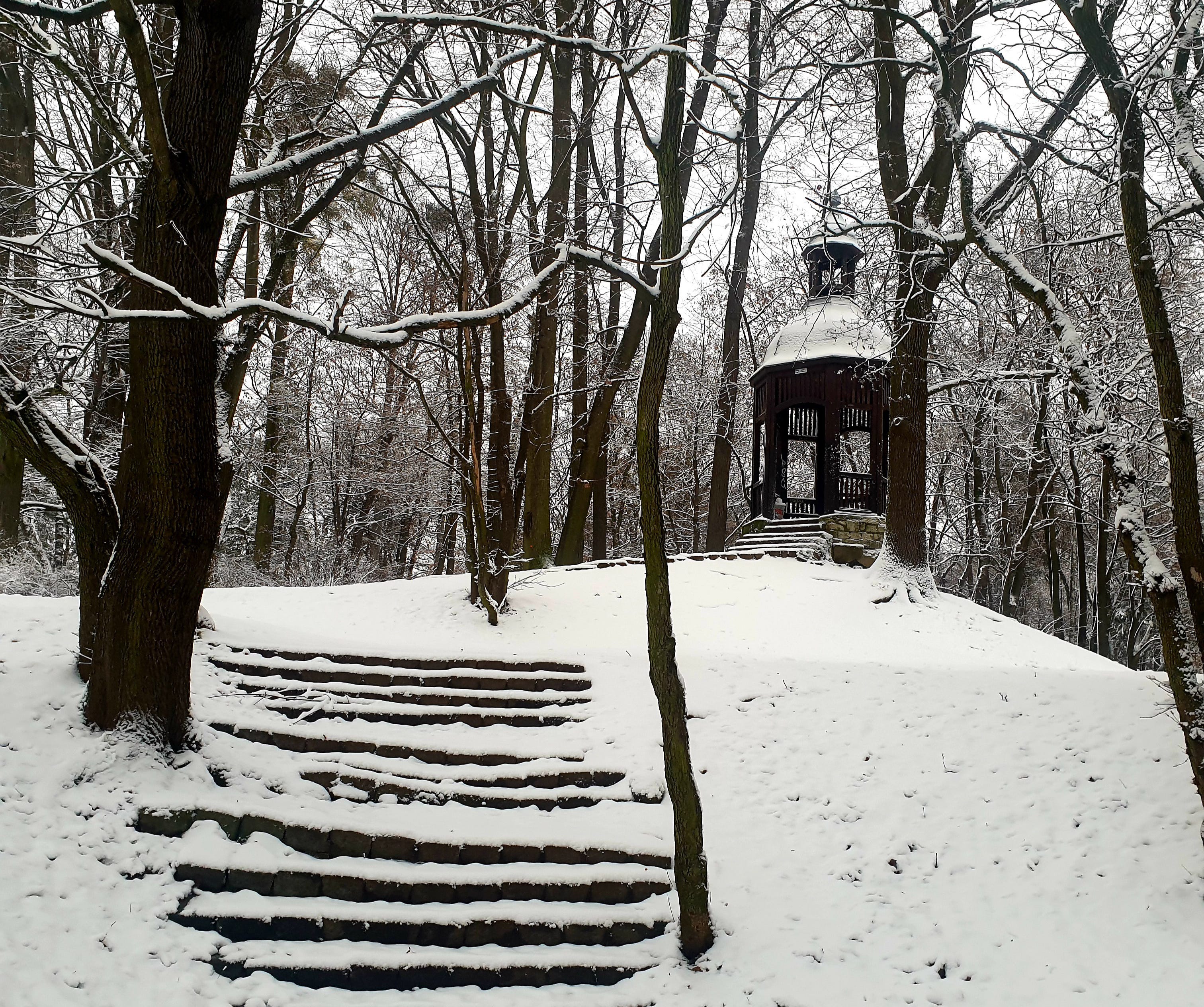
This enabled me in becoming a bit too much of a romantic localist. The fact is that places like Tarnowskie Góry would not exist without places like Warsaw. But I was a bit too romantic because I really loved my home that much.
Tarnowskie Góry has changed a lot. It has become bigger and more middle class. Fields I used to run through have turned into suburbs. Dive bars I used to love have been replaced by bistros. The little shops that used to sell cans of lukewarm beer and fly-encrusted pastries have become indistinguishable convenience stores. It used to be difficult to get a glass of wine in the centre of Tarnowskie Góry. Now, there are at least three wine bars.
Hey, that’s life. People need somewhere to live. As people become richer, they start getting interested in prosciutto as well as in pierogi, and in Tempranillo as well as in Tyskie.
God bless them. This seems to be as natural as wearing shorts when the sun comes out. But I am still something of a romantic localist. Places change, and it is delusional and arrogant to have a fundamental problem with that, but we can hope that change will happen in a manner that links the past, the present and the future so as to invest us in the story of a place. Influences can be broad and innovative but we can hope that the combination will be synergistic. People will come and go but we can hope that the sense of a society endures.
I love Tarnowskie Góry and I hope that people will continue to love it as it becomes something new and unexpected. For all that I’ve become happier and mature in Poland, I have had a lot of hard times (some unfortunate, some self-inflicted). But however sad I was, or stupid I was being, I never felt entirely alone on Tarnowskie Góry’s streets. That’s home for you.
A very nice piece of writing -- as usual from you. I visited Poland once, and only very briefly. It was in the "old days" (late 1970s). I was young and even dumber than I am now. But it was fascinating and the people were incredibly welcoming. I always intended to go back, but things never seem to work out the way we intend. Please keep up the great work. Everything you write is interesting, but I especially enjoy reading about life in your little corner of Poland.
Ben, this is just excellent. I have a lot of respect for expats visiting and living in smaller towns (in Poland, but also anywhere). It is there where the true heart of the country beats. You have made very good choice, and thank you for writing (repeatedly!). Please also see my related piece about Silesia and Szopienice, not far. Keep in touch for sure. https://nomadicmind.substack.com/p/silesia-the-other-poland