

Hello,
Obligatory shilling. This month, I wrote on THE ZONE about the British doom loop, Douglas Adams, horses, why people look younger for longer, racial ideology in education, abuse and irrationality in evangelicalism, and the endless sins of Tony Blair.
I’m very sorry for the somewhat lighter publication schedule in May but I’ve been writing a little book. I hope I will be on better form next month.
I wrote for The Critic about anti-Jewish terrorism, right-wing cancel culture, establishment journalists, Dana White and mental health, Roald Dahl, Itamar Ben-Gvir, chicken farming, “optimisation” and 2020.
For Quillette, I reviewed Suicidal Empathy by Gad Saad.
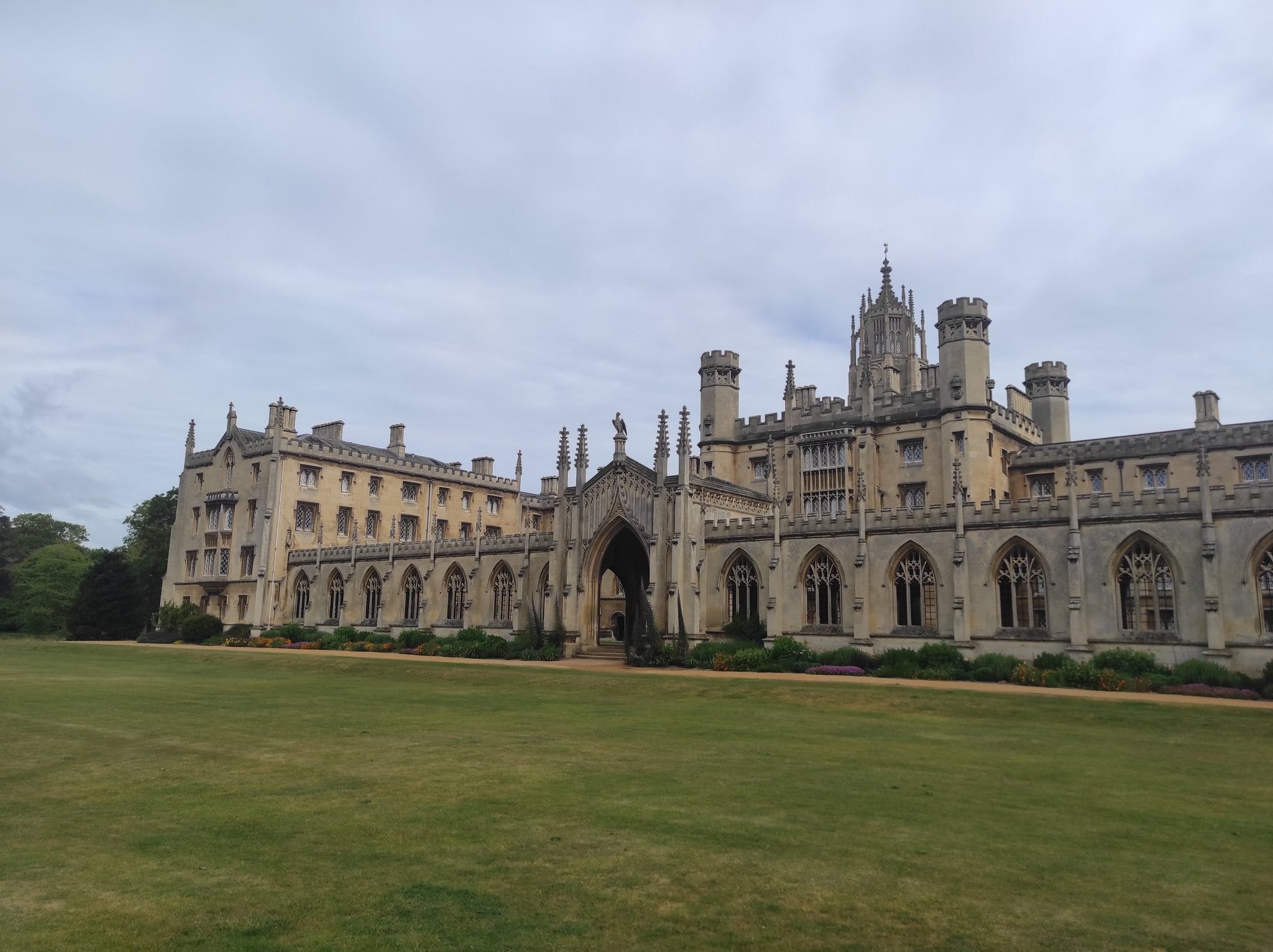
A fellow visiting Cambridge. It was lovely to visit Cambridge this month to attend the launch party of my sister’s new book When the Music Fades (which, by the way, is receiving rave reviews). What a place it is.
Attending a formal dinner, I was surprised to learn that I had been inexplicably made a doctor:

I believe that this is what you call an “honorary degree”. From now on, I am Dr Ben Sixsmith.
Keyboard concerns. As I write, my laptop is missing an “n” key. When I need an “n” I have to copy and paste it. The name “Isaac Newton” is great because I can copy an “N” and an “n”. You would think that this would be incredibly annoying, and it is, but at least it makes me more conscious about my prose. It does make me very biased against using words like “interconnecting” or “inconveniencing”. But that isn’t necessarily a bad thing.

The city and the cities. Fred Sculthorp visits Dubai:
Before Tuan let me go back to my apartment in the Marina, a place costing me more in a week than he earned in a month, he showed me around his neighbourhood. Its bustling streets were the busiest I had seen in Dubai. They gave the impression that the entire world outside of the West — from Africa and the Indian subcontinent to Indonesia — was assembling on the periphery of the city ready to inherit it. “One day, you will join us here,” he said in a way which meant I wasn’t sure if it was a joke, a threat, a serious vision or all three.
A mainstream fantasy land. Chris Bayliss writes on establishment delusions:
We are a country with anaemic GDP growth, stagnant productivity, and a growing share of the adult population out of work. We also have a reasonably high level of general education and plenty of capacity to train people to do various jobs. The fact our governing class seems to have absorbed the idea that we need to maintain permanent positive inflows in the hundreds of thousands is reflective of something very unhealthy and abnormal.
Everyday barbarism. Bentham’s Bulldog addresses livestock farming in the UK:
All across the world, even in an unusually high welfare place like the UK, animals rot in hellish conditions. I’ll discuss the torments that are standard practice. Things are often much worse, because only about 2.5% of UK farms are inspected in a year.
The lonely death of Henry Nowak. Ed West reflects on anti-majoritarian ideology:
At the trial, prosecutor Nicholas Lobbenberg said that the killer had used the ‘trump card’ in making the allegations of racism. Such a trump card should not exist, but the sin of racism has undergone runaway moralisation, growing out of all proportion to its real harm. It clouds people’s judgement and in many cases places the public at risk.
The rule of three. Simon Evans writes beautifully about life and death:
I have of late had a number of what are sometimes called “reversals”, a term I like as it encourages us not to take them personally. Nevertheless, I am a pattern seeking animal, and not always fooled by word choice. So, forgive me if this seems a bit pat. But it does feel as though Fate has taken an unusual interest in me, and played, to be fair, a blinder, a very clever bit of at least 2-D chess – more than enough dimensions to skewer the likes of me - pinning my knights and getting my Queen up on blocks, before revealing the unsuspected attack on my King.
Reading roots. Bethel McGrew reflects on homeschooling:
When I was a child, I became used to awkwardness when strangers found out I was homeschooled. “Oh,” they would say, fumbling for something polite to say. “Do you like that?” I didn’t know what answer they expected, but I always said that I loved it. How could I not? I lived in a house of ten thousand books.
Have a lovely month,
Dr Ben Sixsmith