

Hello,
Obligatory shilling. This month I wrote at THE ZONE about animal welfare, marriage and illness, apocalypse cults, public executions, vindictiveness, Emo Philips, morbid journalism, excuses for the violence in France, blind dogma, Stanisław Wyspiański and creativity, online smears and the war in Ukraine.
I wrote for The Critic about Andy Burnham, AI novels, blasphemy laws, animal abusers, nihilism cults, fantasists, rioting and social media, lifestyle columnists at The Telegraph, the H3 Podcast and parasocial relationships, comedians and cancel culture and the war in Afghanistan.
I wrote for AmCon about Norm Macdonald.
Finally, I wrote a piece for The Thinkable Review about Primetime and performative justice. It isn’t out yet, but subscribe for when it is.

Grave matters. This will be a big weekend in the Polish calendar. On Saturday, it’s Halloween. On Sunday, it’s All Saints’ Day. As I’ve written before, there’s something odd about having a big party the day before you go visiting graves. I’m sure it winds up Polish traditionalists. But there’s no turning back the adoption of Halloween. People like to party too much. Perhaps there’s a means of connecting these events. The term “sober up” applies to the physiological. But it can also have spiritual connotations. What could sober us up, in the latter sense, more profoundly than visiting graves? We can — at least in theory — enjoy life and reflect on death without either experience invalidating the other.
Childhood trauma. Halloween used to be a difficult time in the Sixsmith household. My mum, who was a passionate evangelical Christian, didn’t let us watch Simpsons Halloween specials. Oh, how I would burn at the injustice of it — at the monstrous scale of the oppression. How I would seethe like some sort of 10-year-old Solzhenitsyn.
Looking back — if your major gripe with your parents is that they didn’t let you watch Simpsons Halloween specials, you had a pretty charmed life.
The missig key. This month, the keyboard on my laptop broke and I had to get it replaced. For more than a year — unrelatedly — the keyboard had been missing the “n” key. Any time I wanted to use an “n”, I had to copy and paste it from somewhere else. This might sound fantastically annoying — and it really was — but it might have made me more mindful in my writing. You have to think about what you’re doing if you do’t wat your prose to suddely look like this.
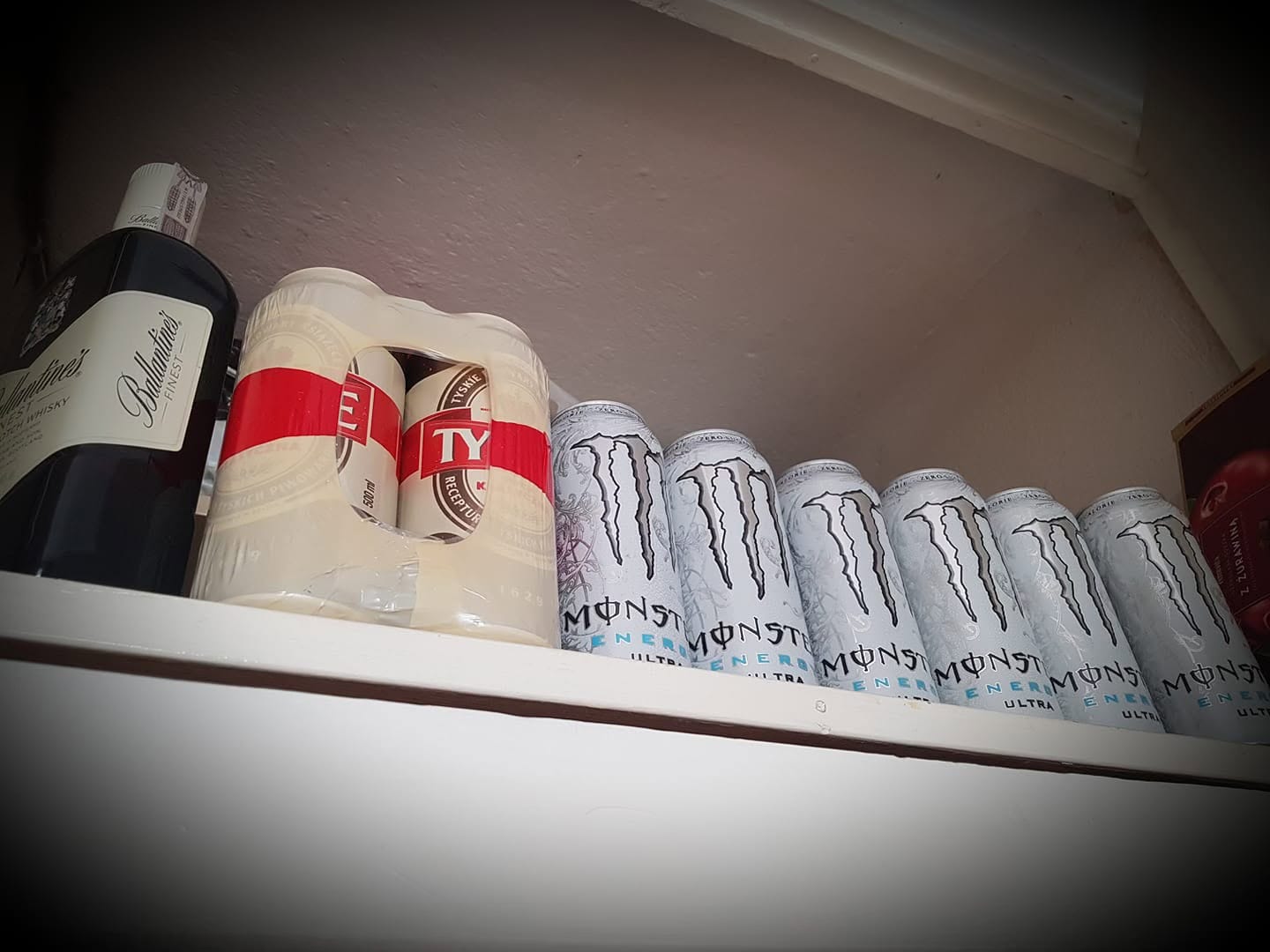
Bad prepping. The British government is advising people to create an emergency stockpile of supplies. I think the decisions of successive governments, when it comes to neglecting infrastructure and social cohesion, have made the U.K. far more fragile than it should be. Still, in fairness, in a troubled world, it is not a bad idea for people to “be prepared”. I have personal experience of this. Before the lockdowns, in 2020, I could sense that we were entering a time of crisis. So, I went out to the shops and stockpiled … energy drinks and Polish lager.
Okay, perhaps my prepping skills could have done with a bit of work.
The Garden of Acres. Fred Sculthorp reflects on the curious emptiness of New Build Britain:
For its residents, New Acres is a sanctuary. A place described by one resident as having a “fairly chill vibe for what it is”. Maintaining this mood is enough to constitute a noble struggle against the outside world perceived to be in the grips of an inchoate darkness. A stoicism of the senses and emotions, driven by padel tournaments and devotion to e-commerce and recruitment businesses is encouraged — one that has more in common with the Victorians than Ballard’s middle class post-war degenerates.
The curse of Campbell. Max Jeffery surveys the career of Alastair Campbell:
Please, one last indulgence, implored Alastair Campbell. The previous two hours had been bad enough, sitting through Campbell being ‘interviewed’ by former Today host Mishal Husain about his godawful new self-help book. And the hours before had also been painful, trying to read that book, Persevilience, which is somehow both superficial and incomprehensible. Yet, as the launch event inched to a close, Tony Blair’s old spin doctor wanted still more attention. In fact, no, he wanted more than still more attention. He wanted to masturbate. Would you mind, he asked, standing in front of a giant projection of his own face, if I played ‘Ode to Joy’ on the bagpipes?
Here is my old review of Campbell’s podcast The Rest Is Politics.
Status games. Noah Carl writes on status competition:
Our well-being is far more dependent on our status than our income. And status, unlike income, is relative. It’s zero-sum. If one person has more, others must have less. Yes, the rich report higher life satisfaction than the poor, but that’s because they have higher status. If absolute income is what mattered, we’d all be living in bliss, knowing how impoverished our ancestors were.
I don’t think this is entirely true, because we while we know our ancestors were impoverished, we haven’t felt that level of poverty. But I think it’s somewhat true.
Why were the Victorian elites so successful? Samuel Hughes, at Works in Progress, and Don Fox, at Pimlico Journal, offer different perspectives.
Up close and personal reading. I’m really enjoying Sarah Fletcher’s analyses of classic poems for us at The Critic.
Nonsense and modern sensibilities. Felice Basbøll reviews Sense and Sensibility:
Austen is no stranger to a good Deus ex Machina, but they serve to resolve the plot and karmically reward her favourites for their virtues, not to save her characters from making any choices that involve compromise or facing reality. In this new and improved Austen, the main characters are recast as unproblematic saints rather than merely virtuous, because only thus could they deserve their happy endings in 2026. They cast off the chains of family and obligations for love. And thus, Gen-Z’s puritanical romantic morality has conquered Austen’s subtle realism. Jane Austen is just too radical for modern sensibilities.
Art, Islam and internationalism. Pierre d’Alancaisez reflects on the arts and the Arab world:
Sharjah fuelled the slow realisation that the relationships between ideas, states and cultures were not immune to manipulation. Yet, even as Western countries were opening their borders, the Gulf’s cultural industry deployed the same internationalist aesthetic precisely to protect itself from the downsides of cultural globalisation.
Special offer! It’s almost Christmas, which means I’m offering a special offer on paid subscriptions to THE ZONE. (No, Ben, don’t treat your audience like this! You just want more paying subscribers! You know this, they know this!) Quiet, you. Yes, for Christmas I’m offering 30 per cent off paid subscriptions — for one year — in this CHRISTMAS SUPER SPECIAL OFFER SUPER 2026!
Have a lovely month!
Ben